

A report says new cleanup rules for renewable energy sites are hurting the competitiveness of Alberta's industry, prompting one veteran analyst to call on the federal government to intervene.
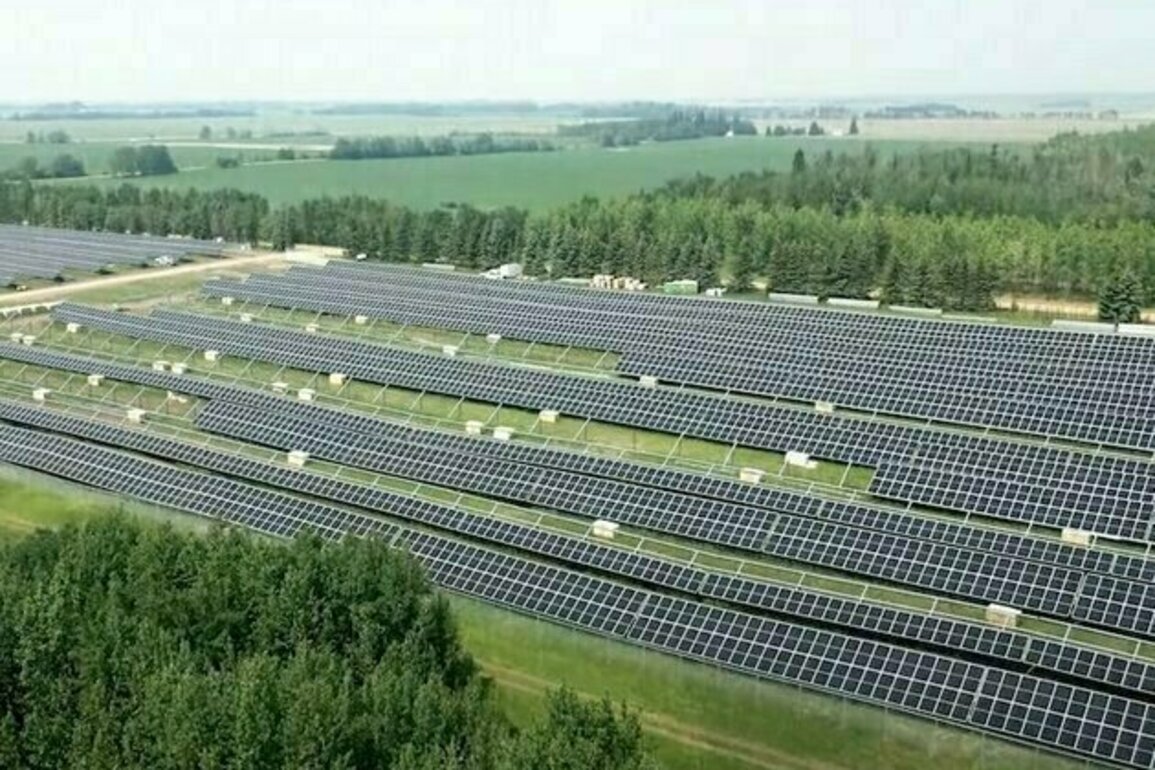
Business Renewables Centre-Canada analyzed the reclamation security requirements for renewables in 27 jurisdictions and found Alberta's are now the most costly, The Canadian Press reports.
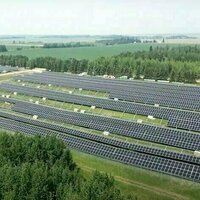
Under a code of practice for solar and wind projects published earlier this month, the Alberta government says operators must provide an estimate for the cost of dismantling turbines and panels, removing underground concrete infrastructure, hauling waste away, replanting vegetation, and other items.
The new rules require a 30% security deposit up front, rising to 60% after 15 years to ensure there is enough money for proper cleanup at the sites' end of life.
BRC-Canada says Alberta's that requirement is unusually high, and the rules don't take into account the salvage value of the concrete and metals that could be sold to recoup cleanup expenses. Analyst and self-described climate futurist Michael Barnard takes the critique one step further, accusing Alberta of "renewable energy sabotage" and calling on the federal government to intervene.
"Alberta's latest assault on renewable energy investors is as clear as it is cynical," he writes for CleanTechnica. "Shockingly, these rules apply retroactively, extending their punitive reach to existing renewable facilities by 2027. This creates a chilling financial burden on both new entrants and long-established projects that already had business plans based on vastly different regulatory assumptions."
Barnard contrasts the new regime for renewables with the province's forgiving cleanup requirements for oil and gas sites.
"To understand just how extraordinary and damaging this regulatory move is, consider Alberta's longstanding and embarrassingly lax reclamation rules for fossil fuel extraction," he says. "For decades, the province has allowed oil, gas, and coal industries to accumulate massive environmental liabilities while contributing pennies on the dollar toward cleanup costs. The Alberta Energy Regulator's own numbers are stark, showing a staggering $60 billion worth of unfunded cleanup obligations for abandoned oil and gas wells, with only about $300 million secured from industry, less than 1% of the total liabilities. Other assessments suggest the real liabilities are closer to a quarter of a trillion dollars."
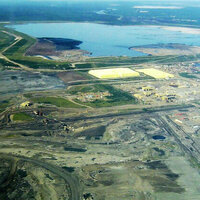
Oil sands mines face "over $57 billion in reclamation obligations and a mere fraction of that amount actually secured through the Mine Financial Security Program."
The Alberta government issued the new rules for renewables in February 2024, just as a punishing seven-month moratorium on new renewable project approvals expired, CP writes. But it had yet to lay out the details around how they'd be implemented. The province was leading Canada in new renewable energy development until the moratorium blew up the market.
Jorden Dye, BRC-Canada's director, said many renewable projects are being built by multinational companies that can move their capital around easily.
"And it'll just be really disappointing if we see Alberta lose out and lose our ground as the biggest developer of renewable energy in the last few years in Canada because we've continued to place onerous rules on the industry," he told CP.
In addition to the reclamation security requirements, the province has placed buffer zones around wind turbines so as not to impede "pristine viewscapes" and is taking an "agriculture first" approach to deciding what can be built on farmland, effectively taking those decisions out of the hands of the farmers who know their land best. The province is also working through consultations on the structure of its energy market as well as transmission regulations.
"If you take one by itself, it's OK-we might be able to live with it, or we can work around it," said Dye.
"It's kind of getting to the totality of the decisions that's really driving some of the concerns."
The BRC-Canada study noted some jurisdictions-such Illinois and Tennessee-require a 100% reclamation security, but only 10% of it must be paid up front.
"Renewable energy projects are really sensitive to the up-front capital cost," Dye said. "Having that as an operating annual cost is a lot different to whether a project will go forward than if it's an up-front cost."
Three-quarters of the jurisdictions the group compared accounted for the salvage value of materials once projects are dismantled. While that amount may not reflect the real-world value of the metal and concrete decades into the future, it does go a long way toward offsetting the reclamation costs, Dye said.
He added wind and solar projects generally have a lifespan of 20 to 50 years, but components are often refurbished along the way. And when they're done operating, there is decades' worth of real-world data to make pursuing another development easier.
While an oil or gas well will eventually become depleted, "the sun and the wind will still be there in those exact spots," Dye said. Months ago, analysts in Alberta told The Energy Mix that redevelopment potential makes solar and wind the only forms of energy where the value of a development site increases over time, rather than declining.
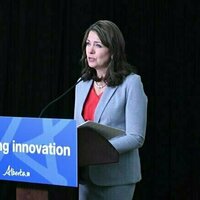
In announcing the renewables policy in February 2024, Alberta Premier Danielle Smith said the province was looking for a different and better way to approach solar and wind cleanup than what had been done for oil and gas.
"It is critical that we do not repeat errors of the past, and that we have reclamation rules and costs accounted for at the beginning of any development," she said. The reclamation bond or security can be paid to the Alberta government, or be negotiated between the renewable developer and a landowner.
Janetta McKenzie, oil and gas program director at the Calgary-based Pembina Institute, said the rules for wind and solar are fundamentally different than "generous and flexible" ones for oil and gas.
In that sector, companies are required to pay about 1% of cleanup costs in up-front securities, with no firm timelines, she said.
The industry-funded Orphan Well Association looks after closure costs when a fossil company has gone bankrupt or otherwise cannot meet its obligations. But that organization "is also buttressed by some interest-free loans from the provincial and federal government and is pretty persistently underfunded," McKenzie said.
"This is a province that wants to unleash its energy sector, but there is an energy sector that's waiting for a stable regulatory environment and then one that is being given a lot of options to not reclaim and not clean up after itself in a timely manner."
The main body of this report was first published by The Canadian Press on June 10, 2025.
Source: The Energy Mix