

A rural landowner in Alberta is calling for an ethics probe into a senior advisor to Premier Danielle Smith, alleging the architect of the province's oil and gas cleanup strategy held multiple conflicting roles-consulting for the oil sector, advising the Premier, and sitting on the energy regulator's board-while receiving public funds through sole-sourced contracts.
Represented by Ecojustice lawyers and backed by a coalition of concerned Albertans, Dwight Popowich of Two Hills filed a formal request [pdf] with the provincial ethics commissioner. He argues David Yager's central role in developing Alberta's Mature Asset Strategy (MAS) for inactive, orphaned oil wells while actively working within the fossil fuel industry may have violated the provincial Conflicts of Interest Act.
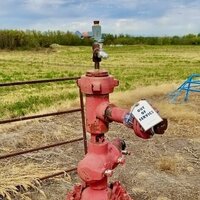
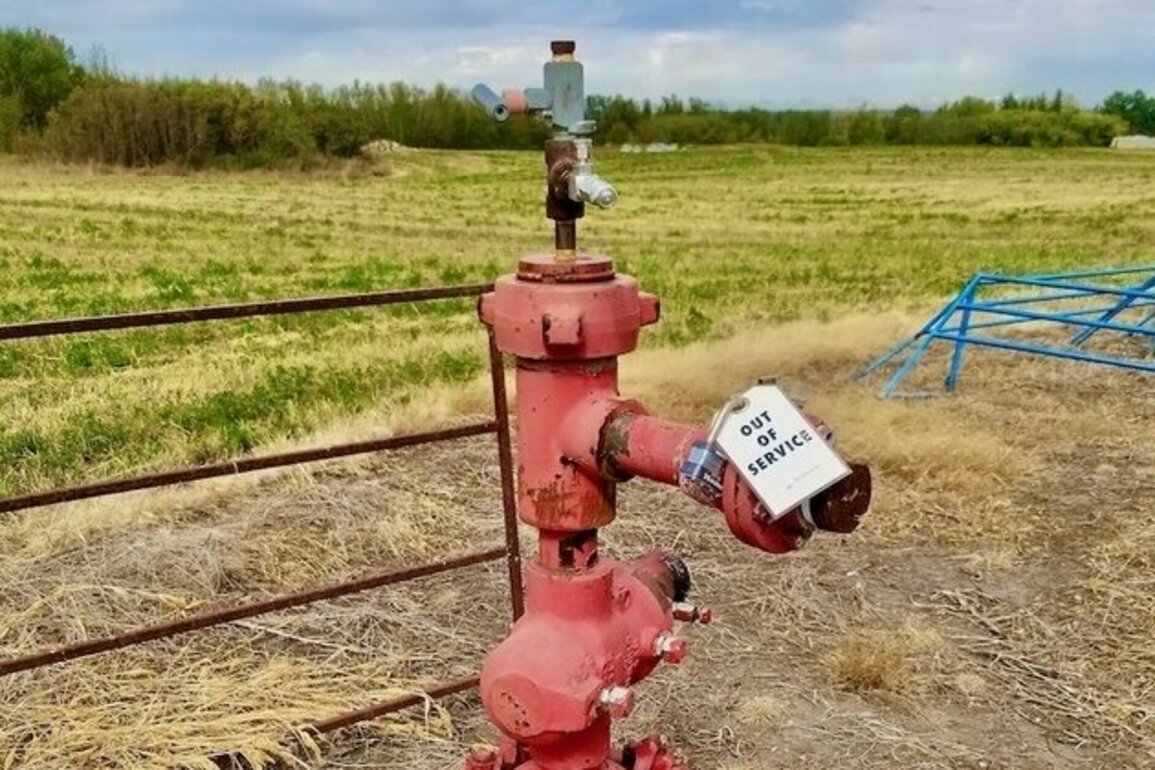
"This process used to get the Mature Asset Strategy (MAS) was flawed, and probably the outcome is flawed, too," Popowich told The Energy Mix in an interview. Popowich has an orphaned well on his property and for many years he received no payments from the leasing company, the filing states. The company that owned the well, Sequoia Resources Corp. went bankrupt in 2018 and the Alberta Energy Regulator (AER) told him it could take 10 to 12 years for his well to be reclaimed-a delay tied to funding shortfalls under MAS.
"There was a conflict of interest here by the guy that led this process," Popowich alleged, referring to Yager. "It is very obvious to a lot of people that were involved in it that it was being driven in a certain direction to come to an already pre-determined outcome."
Oilfield services executive Yager, a special advisor to the Premier, board member at the AER, and former Wildrose party president-led the creation of the MAS. The letter filed by Popowich to the ethics commissioner states that since Smith became Premier, Yager has received more than $400,000 in four sole-sourced government contracts.
Two of the largest contracts are payments for designing MAS, and both overlapped with his role at the AER-a quasi-judicial, independent agency meant to regulate the development of energy and mineral resources in Alberta.
Yager's MAS report follows a familiar oil industry pattern used for decades to avoid responsibility for cleanup costs. Critics say the strategy was "heavily industry-led." About 70% of the participants in the engagement process came from exploration and production, oilfield services, power generation, or technical/engineering fields.
According to his personal website, Yager was a top fundraiser for Smith's Wildrose Party leadership bid in 2009, and an advisor to current energy and minerals minister Brian Jean when he took over as leader in 2017. Yager then backed Jean when he unsuccessfully ran for the leadership of the newly-formed United Conservative Party. In his 2023 mandate letter from Smith, Jean was tasked with a review of the AER and improving several of its processes.
When contacted by The Mix for comment, Yager said he "had no idea what's going to happen" and "that's all I have to say." He suggested contacting the government for comment. His phone's caller identification still displays as "Jean for Premier."
Ecojustice's Susanne Calabrese, one of two lawyers representing Popowich, told The Mix the circumstances around awarding the sole source contracts to Yager were "very troubling."
"It's the Executive Council ultimately that made the decision, which by the way, also doesn't meet a lot of the other requirements," said Calabrese.
The decision made by the executive council-which is led by the Premier-to hire Yager for the job needs to be reviewed in light of the government's procurement policy around such contracts, Calabrese suggested.
"All of this should be looked at by the ethics commissioner to get more information about decisions that were made, who exactly made them and approved them, and why this was allowed to happen four times in a row," she said.
Cattle producer and rancher Bill Heidecker, president of the Alberta Surface Rights Federation, is backing Popowich's call for an investigation.
"It is inappropriate to have an unabashed energy insider generating policies to address the mature asset crisis which is the result of decades of energy industry influence on government," he said in the news release. "The energy industry must fulfill its cleanup obligations prior to any redoubling of energy development."
Popowich says the mature asset strategy will soon become law-a prospect he sees as "a real hit" to rural Alberta, both economically and environmentally.
"The focus throughout the MAS report is on what is most beneficial to the continued economic viability of the fossil fuel industry, not how to accelerate well cleanup for the public benefit or how to support municipalities and landowners affected by companies that do not pay what they owe," he stated in his filing.
In May, Popowich also filed a formal request to the AER for reconsideration of its decision on this year's orphan fund levy, arguing it is insufficient, and possibly not following the law. The levy determines how much money oil and gas companies must pay to the Orphan Well Association (OWA) to clean up abandoned wells, pipelines, and other fossil fuel infrastructure.
Drew Yewchuk, a doctoral candidate at the University of British Columbia and former staff lawyer with the University of Calgary's Public Interest Law Clinic, found that the number of wells to be decommissioned increased 125% from 2024 to 2025. But the AER set this year's levy just 7% higher than last year's.
Popowich said the AER gave him a file number for his request for reconsideration, and he received a few requests for further "hoops to jump through". He said it's a good sign that the agency is "not going to just ignore it."
He said he keeps the pressure on the AER because he wants "to leave a legacy behind that is positive, not negative."
With six grandchildren, ranging in age from five to 18 years old, Popowich has a big extended family to keep him busy. He and his wife own 75 acres of land, 25 acres of which is treed with walking and skiing trails, and an alfalfa field on the remaining 50 acres.
"The real kicker here is that the protection for my grandchildren and children is in the orphan well fund," he said. "That is a security net for all Albertans so that we don't get stuck with having to clean up after these bankrupt producers."
He added: "We have these great laws here in Alberta when it comes to energy production, but the problem is we don't always follow them. This conflict of interest is about following the rules, rules that are meant to stop overreach of government and industry into our lives."
According to the ethics commissioner website, the office can't disclose that it has received a request for an investigation, whether it is conducting an investigation, or the outcome of any investigation.
If the commissioner conducts an investigation, it is submitted to the Speaker of the Legislative Assembly. The decision on whether to publicly release information about an investigation is not made by the ethics commissioner.
Source: The Energy Mix