

More than a dozen organizations are backing a landowner's formal challenge to the Alberta Energy Regulator, saying the agency "failed to follow the law" when it set this year's funding requirement for cleaning up abandoned oil and gas wells.
Alberta's 2025 orphan fund levy determines how much money oil and gas companies must pay to the Orphan Well Association (OWA) to clean up abandoned wells, pipelines, and other fossil fuel infrastructure. The AER uses a formula to calculate how much each company is required to contribute to the total budget. Once approved, money is transferred to the OWA, which also receives funding in the form of interest-free loans from provincial and federal governments.
This year's $144.45-million levy-just 7% higher than in 2024 despite a dramatic rise in orphan sites-triggered the demand for formal reconsideration.
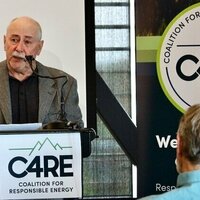
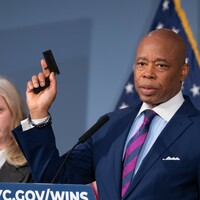
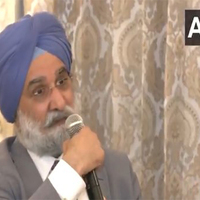
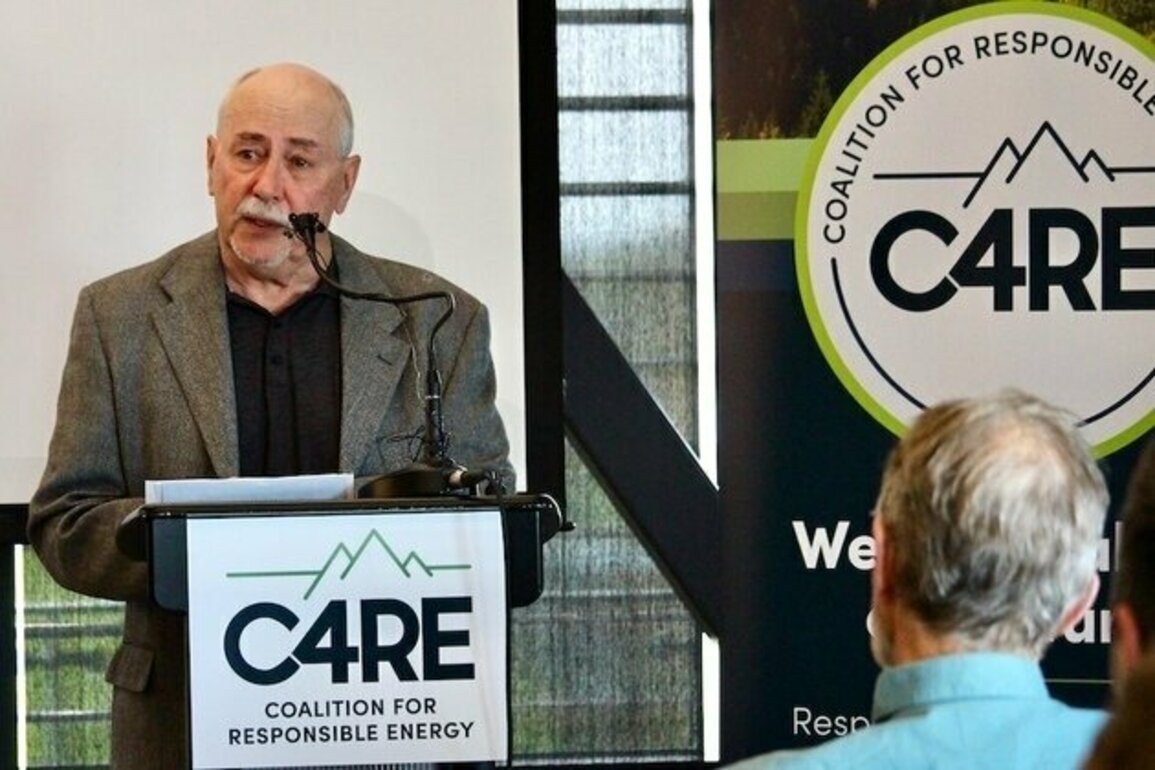
Dwight Popowich, a landowner from Two Hills, Alberta, and the Coalition for Responsible Energy (C4RE)-a new coalition of scientists, academics, and Indigenous and civil society organizations-filed the challenge, saying the AER failed to follow the province's law governing orphan wells, the Oil and Gas Conservation Act (OCGA).
This is the first time such a challenge has been filed, C4RE said in a release. The involvement of the Alberta government is one of several issues raised in its submission, which seeks a formal "reconsideration" of the levy. In the document, which was shared with reporters at a news conference, the coalition argues the decision on the levy "belongs to the AER alone," and any involvement of the government is an "error of law."
The AER has the authority by legislation to decide the levy, but its media management specialist Renato Gandia confirmed in a statement to The Energy Mix that the final decision was made by the Alberta government.
Josh Aldrich, press secretary to Energy and Minerals Minister Brian Jean, said in an interview that he did not want to comment on why the government needed to approve the AER's orphan well levy. Neither Gandia nor Aldrich responded to The Mix's emailed questions about the detailed issues raised in the submission.
Popowich told reporters last week that the OWA said he would have to wait another 10 to 12 years for the orphan well on his land-drilled by bankrupt company Sequoia Resources- to be cleaned up, because the agency doesn't have enough funding.
"We don't know if this thing is leaking or not," Popowich said. "We don't know if this thing's going to blow up one day as we go beside it with a tractor."
"It is sitting there with nobody looking after it. And there are thousands of these wells out there like that."
Popowich said the wells are dangerous, but they're not being treated that way by the government nor by the producers who are legally responsible for policing the sites to make sure people don't get injured.
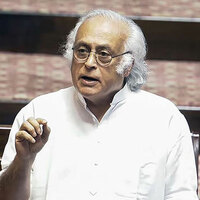
Dr. Norm Campbell, Professor Emeritus of Medicine at the University of Calgary, representing the Canadian Association of Physicians for the Environment, told reporters "nearly all wells, whether active or abandoned, leave various toxins."
"People who are living in areas where there is oil and gas show increased incidence of various lung diseases, cancers, heart attacks, heart failure, stroke, birth defects, premature births, and low birth weights," he said. "This is not something that can wait decades."
In March, the AER announced this year's orphan well levy of $144.45 million, an increase of just 7% over last year's levy of $135 million.
The coalition doesn't believe this amount is sufficient and that it continues a pattern of underfunding the OWA. A May 2023 report by Alberta's auditor general found the AER was not "collecting sufficient financial security and minimizing risk of inappropriate licence transfers."
Drew Yewchuk, a doctoral candidate at the University of British Columbia and former staff lawyer with the University of Calgary's Public Interest Law Clinic, analysed orphan well funding for the coalition.
He found that the number of orphan wells to be decommissioned through the program increased significantly from 2024 to 2025. The OWA 2023/24 annual report listed 1,719 orphan wells, while the website lists 3,873 in 2025, an increase of 125%. The numbers don't include pipelines and other related infrastructure.
Gandia did not confirm the orphan well numbers nor respond to a question from The Mix on why the levy is not keeping up with the year-over year increase in the inventory.
"So how did the regulator choose $144 million this year as the levy? We still don't know," Yewchuk told reporters. "The AER set the levy as they have always done, behind closed doors with no public consultation, and without hearing from the people who are most impacted."
In a statement provided to The Mix, the AER said it uses "information about the current volume of the orphan inventory, the volume of potential orphan energy sites, and the OWA's average site closure rate" to inform its recommendation.
When asked by email to provide the specific numbers used for this calculation, Gandia referred to a Liability Management Performance Report on the AER website that hadn't been updated with numbers beyond 2023. He did not respond to a further request for updated numbers.
The C4RE submission questioned whether the AER orphan fund levy meets the legal requirements of the OCGA-that the amount must be sufficient to cover costs for the fiscal year, as well as any deficiencies from the previous year.
According to Yewchuk's analysis, "the OWA is $862 million behind in spending on orphan closure and has another $337 million in government loan repayment obligations." The loans are due to be repaid before 2035, leaving a total of nearly $1.2 billion that needs to come from somewhere.
Jean responded to the report in a statement calling it "impractical and uneconomic" to tackle the backlog in one year.
"The goal is to make progress on reducing the overall asset retirement liabilities of the industry as a whole, something that was ignored by past governments, including the NDP."
Jean said industry is increasing the pace of its cleanup of inactive wells and pointed to a rise in overall private spending on closures. But the spending he mentioned did not go to the OWA to help reduce its existing orphan well inventory.
"This sweetheart deal is minimizing costs to the industry while maximizing the risk to taxpayers, landowners, and the environment," said Popowich.
CBC News reported that the OWA received a payment of $30 million last year to help remediate at least some of the 2,000 wells, pipelines, and other infrastructure owned by Sequoia Resources after the company went bankrupt. The estimated cost to clean everything up, including the well Sequoia owned on Popowich's property, was around $200 million.
Members of the coalition warned the orphan well problem is only going to get worse with new fossil fuel development coming to the province.
"If there is to be a redoubling of energy development and activity in Alberta, then clearly issues with past energy activity must be dealt with first, including ensuring the orphan fund is properly funded by industry," Bill Heidecker, president of the Alberta Surface Rights Federation, and a cattle producer near Coronation, Alberta, said in the news release.
Paul McLauchlin, reeve of Ponoka County and past president of the Rural Municipalities of Alberta, was also quoted in the release and backed the call for reconsideration.
"If Alberta's oil and gas industry wants to attract outside capital and increase production, they need to first clean up their mess," he said. "They signed a contract to do so, and a promise is a promise."
Coalition co-founder Phillip Meintzer said the group has not yet received a response to its submission, which was sent to the AER on May 27.
On May 29, Lakeland Today reported that a methane leak found last June in a residential area in the town of Bonnyville would require the demolition of two homes and ongoing monitoring while an orphan well from the 1960s was repaired and decommissioned.
According to the local newspaper, the OWA had installed "mitigation systems" in eight homes to "safely capture any methane and vent it to the atmosphere."
The decommissioning will reportedly require 20 truckloads to move and assemble a drilling rig in the town for up to three days of 24 hours per day activity, sometime in July or August. After that, the OWA planned to leave the wellhead in place for monitoring, installing a fence around it until the methane dissipates.
Source: The Energy Mix