

The energy world and the new colonialism
Energy is not just electricity, nor just oil, nor merely turbines spinning in the wind. Energy is power. It is independence or servitude. It is war or development. And what we are witnessing today, on a planetary scale, is not a clean transition toward a green world, but a brutal reconfiguration of global power. Beneath the gentle language of decarbonization hides a race for control over sources, minerals, routes, and technologies.
Whoever dominates energy, dominates the world. It doesnt matter whether its coal, oil, gas, lithium, or uranium. It also doesnt matter whether its renewable or fossil. What matters is who owns the switch. And today, that switch is no longer where it once was. The United States no longer controls everything. Europe is increasingly dependent. China codes it. Russia uses it as a weapon. And the Global South, as always, gives it away.
For centuries, empires were built with mines, slaves, and ships. Today, they are built with copper cables, nuclear reactors, green hydrogen, and lithium batteries. But the pattern hasnt changed much. Africa still exports without refining. South America still delivers without transforming. Oceania keeps digging for others. And Antarctica waits, frozen, to be divided.
The new colonialism does not come with crosses or rifles. It comes with contracts, patents, subsidies, and free trade agreements. It speaks English, sometimes Chinese. It presents itself as investment, but operates as plunder. Because having energy is not enough. One must control it. Process it. Decide over it. And in this century, that will be sovereignty or it will be nothing.
2. A Brief Energy History of the World
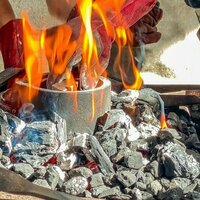
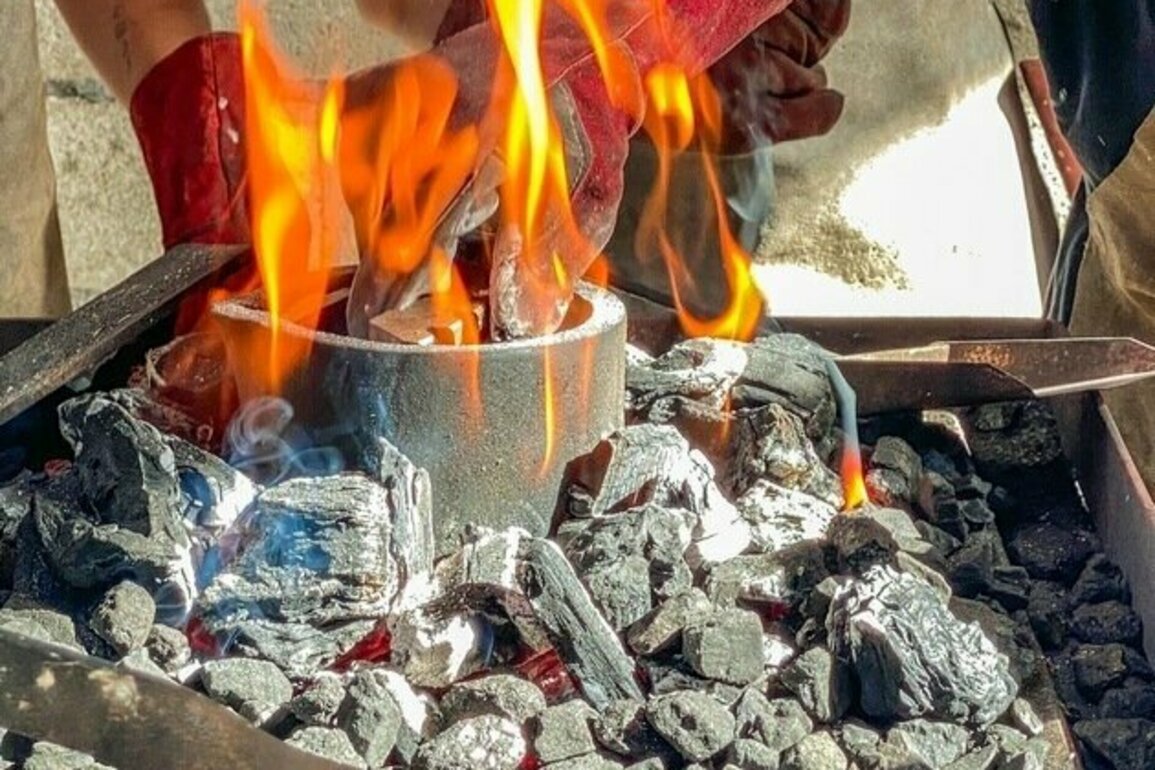
The first act of human power was to light a flame. There was no speech or treatyjust fire. Energy, before language, was sovereignty. Since the Neolithic era, humanity has survived by mastering an energy source, expanding it, distributing it, and ultimately turning it into hegemony. First came firewood, then charcoal. With these, food was cooked, metals were melted, and the first cities were built. But capitalism had not yet arrived. Energy still wasnt a commodity.
The Industrial Revolution changed everything. Coal stopped being domestic and became imperial. England built its empire on deep mines, chimneys, locomotives, and factories. Cities filled with smoke, lungs with sootbut Europes treasuries grew. The steam engine was more decisive than any king.
Then came oilthe great black liquid of the 20th century. Armies moved with it. Skyscrapers rose with it. Globalization was built upon it. Every coup in the Middle East, every invasion in Latin America, every war disguised as democracy had a pipeline or extraction contract behind it. And when oil began to reveal its ecological cost, uranium arrivedthe atomic promise. Infinite energy, they said. Until the names Chernobyl, Fukushima, and Three Mile Island were heard.
Dams were the other side of the coin: water control, displacement of entire communities, flooding of vast forests. Major hydroelectric plants promised modernization, but often only consolidated inequality. In the places where energy was generated, light often never arrived.
The 21st century brought the great transitionbut not as a solution, as a business. Green energy controlled by the same actors as always. Lithium replaced oil, but the contracts remained colonial. Today, energy matrices define whether a country will be free or subordinated, whether it will be a generator or a servant. Because the matrix didnt changeonly the color of the plunder did.
3. Africa: A continent lit from the outside
Africa is burning. Not because of its people, but because of its energy. The sunniest continent on the planet, with massive rivers, endless deserts, and underground reserves brimming with oil, gas, uranium, coal, and sunlight, remains a dark land. Not due to a lack of resourcesbut because of excessive plunder.
Nigeria pumps millions of barrels daily. Angola exports crude oil to China and Europe. Libya was mutilated not because of its dictatorship, but because of its oil. Algeria is a gas powerhouse that keeps half of Europe heated, while its own population suffers blackouts. Mozambique, recently discovered, has become the new object of desire for the worlds major gas corporations. And Nigers uranium powers Frances nuclear plantseven though over 80% of Nigers population has no access to electricity.
The Democratic Republic of the Congo holds one of the worlds greatest hydroelectric potentials, with the Congo River roaring like a natural turbine. But its energy still fails to electrify villages, illuminate schools, or refrigerate vaccines. It is exported. Privatized. Given away.
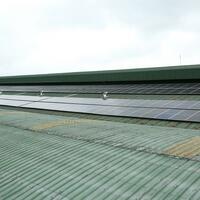
Meanwhile, the African sunlimitless and ever-presentstill has not become sovereign energy. Major European and Chinese energy companies have begun installing massive solar plants but to export electricity via underwater cables to Europe. Africa is lit up, but from the outside.
Seventy percent of Africas energy sources are controlled by foreign companies. Shell, TotalEnergies, ENI, Sinopec. The acronyms change, but the model does not. Its the same as always: the resource flows, the wealth does not. Energy is extracted but never redistributed. The African kilowatt travels the world, while millions of Africans cook with firewood.
This is not a technical problem. Its a structure of power. Its a continent that doesnt define its own energy matrix. It obeys it. Africa produces and exports, but consumes barely 3% of the worlds energy. The very continent that powers the Global North dies in the shadows.
Africa lights up the world, but dies in darkness.
4. South America: Abundance without Autonomy
South America should be a global energy powerhouse. It has oil in Venezuela, Brazil, Colombia, and Ecuador. Gas in Bolivia and Argentina. Copper in Chile and Peru. Sun in the Altiplano. Wind in Patagonia. Water in the Amazon and in the rivers that cross the continent like liquid arteries. And yet, it still depends on foreign investment, raw exports, and the eternal promise of industrializing someday.
Venezuela, with the largest oil reserves in the world, was sanctioned and blockaded until its industry was suffocated. Brazil is pushing forward its energy transition with large dams and biofuels, but Petrobras lives under political pressure and privatization temptations. Bolivia dreamed of a popular and community-based gas and hydrocarbon matrix, but the coup interrupted that path. Argentina, trapped between the gas of Vaca Muerta and the IMF, swings between sovereignty and servitude.
Chile and Peru extract copper, essential for every modern electrical grid, but sell it without smelting, without processing, without real control over pricing or markets. And lithium (that new oil) is handed over under contracts with Chinese, Australian, and U.S. companies, with minimal local capacity for transformation or storage. Wind and solar farms, in many cases, are also in the hands of foreign funds. The wind blows, but it doesnt belong.
The paradox is brutal: a continent with every possible source of energy, yet without energy power. The electric grids remain fragile, industries are still electro-dependent on fossil fuels, and Indigenous peoples (who inhabited these lands with ancestral respect) are displaced in the name of progress.
And so the story repeats. Like in colonial times, resources are extracted for others. Like in the 20th century, they are industrialized elsewhere. As always, planning comes from abroad.
South America has everythingexcept control over its energy. And if it doesnt wake up, it will be a colony once again.
5. North America: Corporate Plunder and the False Transition
The United States consumes more energy than any other country on the planet, except China. But its reserves are in decline. Not because theyve been depleted, but because theyve been mortgaged to a logic of insatiable consumption and to an economic model that prioritizes global dominance over internal sustainability. The country that led the oil age is now pushing the world into an energy transition that keeps it at the topeven at the cost of the truth.
Lithium, shale gas, fracking, rare earths, the appropriation of underground waterits all part of the same ecosystem of power. The United States doesnt just seek energy; it seeks energy control. Shale gas gave it some breathing room, but it also contaminated thousands of kilometers of aquifers. Fracking has devastated entire zones of Texas, Dakota, and Pennsylvania. The White House speaks of clean energy while Indigenous communities in Standing Rock and Appalachia denounce destruction. And meanwhile, the energy matrix remains: 60% fossil fuels, 20% nuclear, barely 20% truly renewable.
Canada, under its image as a green and socially responsible country, hides a fierce extractivist model. Companies like Barrick Gold, Teck Resources, Cameco, and Nutrien operate in Latin America, Africa, and Asia with practices that would be illegal in their own territory. The tar sands mining in Alberta has left an ecological scar the size of entire countries, and Canadas supposed energy neutrality is financed with dirty hydrocarbons exported around the world.
Both countries, under the promise of transition, are deploying a new form of energy colonialism. But now not in the name of oil, but in the name of lithium, copper, and hydrogen. Now the enemy isnt communismits technological dependence on China. Now its not about invading Iraqits about sanctioning Bolivia.
They dont extract to survive. They extract to dominate. And in that equation, energy remains a weapon.
6. Europe: Dependence Disguised as Transition
Europe boasts about its energy efficiency, its green policies, its wind turbines and smart cities. But beneath that showroom of modernity lies an uncomfortable truth: it doesnt have enough resources to sustain its model. And it knows it.
The most industrialized continent of the 19th century is now one of the most dependent in the 21st. It imports more than 85% of its primary energy, and the paradox is brutal: with no mines, little lithium, limited sunlight, and not enough wind, Europe tries to lead the global energy transition. But it does so with resources that belong to others. With Russian gas (when there are no sanctions), with uranium from Niger, with Moroccan hydrogen, with Bolivian lithium and Chilean copper.
Germany, France, and the United Kingdom have bet on renewables, yesbut theyve also reactivated coal plants when gas becomes scarce. Theyve subsidized electric cars while negotiating minerals with African dictatorships. And theyve pushed a green sovereignty that, in practice, remains tied to the cables of the Middle East, Russia, and South America.
Nuclear energy, meanwhile, divides the continent. France defends its reactors as the foundation of its energy mix. Germany shut theirs down, and now regrets it. Poland wants to build its own, while Italy cant decide whether to bet on nuclear fission or on faith in solar. But they all agree on one thing: no one wants to depend on Moscoweven if they cant avoid it.
The European narrative says energy autonomy. Reality shows something else: contracts with Qatar, floating plants in the Baltic, lithium bought at blackmail prices. European sovereignty is, in truth, a diplomatic choreography.
Europe sells turbines, but cant heat its winters without Russia. And thats the irony: it exports ecological conscience, but imports the minerals that sustain it from the very countries it once colonized. The European energy transition is not a liberation. Its a relocation. It changed the source, but not the dependence.
7. Russia and Central Asia: Reserves That Frighten
Its no coincidence that Europe trembles every time Moscow shuts off a valve. Nor that the United States pushes to halt every pipeline crossing Ukraine or Turkey. Russias true power is not in its tanks. Its in its pipelines. In its underground reserves. In its frozen fields that supply half the planet with gas, oil, coal, and uranium.
Russia is the worlds second-largest holder of natural gas reserves, one of the biggest oil producers, and one of the few countries that dominate the entire nuclear energy cycle. Add to that its export capacitywith over 50,000 kilometers of gas pipelines connecting Siberia to Europe and Asia. Its energy not only heats homesit chills political decisions.
Central Asia is its strategic rear guard. Kazakhstan holds 12% of the worlds uranium and is part of OPEC+. Uzbekistan contributes gas, oil, and routes. And the entire region forms an energy corridor as important as it is silentever more coveted by China and increasingly watched by the West.
Russias energy power doesnt rely on speeches, but on infrastructure. On oil pipelines that cross half a continent. On bilateral agreements that sidestep sanctions. On nuclear plants built by Rosatom in Egypt, Turkey, Hungary, and Bangladesh. While other countries export minerals, Russia exports influence.
Sanctions from the U.S. and EU havent weakened that power. Theyve redirected it. Today, Russia sells more gas to China than to Europe. It has created its own energy payment system. And it has solidified its place in OPEC+, aligning with Saudi Arabia to play a pricing chess game that challenges the dollar and so-called free markets.
Because in the 21st century, energy needs no permits, no passports, no treaties. Energy needs no visas. Only pipelines. And as long as those pipelines keep flowing, Russia will keep influencing. Ok Not from diplomatic applausebut from the global thermostat.
8. China: The Factory That Turns Everything Into Energy
China doesnt just produce things. It produces powerenergy, geopolitical, technological. It doesnt need to own all the raw materials. It only needs to know how to process them better than anyone else.
The Asian giant is now the worlds largest energy consumer, but also its largest producer. It generates more than 70% of the coal it consumes. It operates over 1,100 hydroelectric plants. It leads the world in installed solar and wind capacity. It controls 60% of global lithium refining and manufactures 75% of the worlds lithium-ion batteries. On top of that, it has an ambitious nuclear program: over 50 reactors in operation and at least 20 more under constructionwith its own technology.
It doesnt have all the lithium, but it has all the refineries. It doesnt extract large amounts of uranium, but it builds and operates reactors in series. It isnt rich in oil, but it has strategic reserves and agreements with Iran, Russia, and Africa. Instead of depending on one resource, it diversifies its sourcesand above all, it adds value.
While the West gets stuck in ideological debates about the energy transition, China executes it as a national strategy. Its companiesmany of them state-owned or with state participationnot only dominate the domestic market but also buy plants, mines, and power grids in Asia, Africa, Europe, and Latin America. Its infrastructure is not just steel and cables. Its foreign policy.
CATL, BYD, State Grid, China Three Gorges, Sinopec, CNNC. These are technical names, but also the backbone of the new energy order. Since 2015, China has been exporting complete power plants, electric trains, solar systems, and energy storage models. It doesnt sell raw resourcesit sells the entire system.
And the most unsettling thing for its competitors is that it does all this without militarily occupying any territory. China doesnt depend on the world. The world depends on Chinas energy. And in that inverted balance,
a new hegemony is being born without bombs, but with volts.
9. India and Southeast Asia: Growing on Coal and Sun
India burns coal to fuel its growthbut looks to the sun with hope. Its the paradox of a country that needs energy to survive, but also wants to lead the transition. Over 70% of its electricity still comes from coal, despite being the fourth-largest country in solar capacity. Its not for lack of intention. Its because of urgency. The energy demand outweighs any climate policy.
The demand is brutal. One billion four hundred million people, with tens of millions rising out of poverty each year, need light, refrigeration, and transportation. Renewable energy is advancingbut not at the pace of the population. At the same time, India is investing in nuclear reactors, dams, biogas, and solar parks in Rajasthan, Gujarat, and Tamil Nadu. But coal still reigns. Because its cheap. Because its already there. Because it works.
Indonesia, the Philippines, Vietnam, Laos, and Cambodia follow the same pattern: chaotic growth, foreign investment, environmental destruction. Energy comes from open-pit mines, dams that flood jungles, and coal-fired plants funded by Japan, Korea, or China. Southeast Asias energy matrix is not in its handsit lies in its debts.
While the West talks about energy transition, in this part of the world the key word is access. Millions still cook with firewood. Thousands die from lack of ventilation. The solar parks built in South Asia power textile factories for Europenot humble homes. Its the same old story: produce energy for others, not for themselves.
And yet, the speeches are endless. There are climate conferences in Jakarta. There are pledges at the COP. There are speeches in Davos. But there are no cables. There are no transformers. There is no sovereignty.
Millions of poor people illuminate the dreams of the rich. And the smoke from coal is the price they pay for not being left in the dark.
10. Oceania: Energy for Export, but Not for All
Australia is an energy superpower, but it acts like an export colony. It produces coal, liquefied natural gas, lithium, uranium, green hydrogen, and even industrial-scale solar energy but not for its own people. Its energy model isnt designed to ensure access, but to support export contracts with Japan, China, South Korea, India, and Europe.
The country is the worlds second-largest exporter of thermal coal, was for years the top exporter of LNG, and is one of the leading players in refined lithium. But those numbers dont translate into equitable well-being. Indigenous communities living in mining zones like Pilbara, Queensland, or the Northern Territory lack stable electricity and guaranteed access to drinking water. The plunder happens in broad daylightand with state subsidies.
Corporations rule. BHP, Rio Tinto, Fortescue, Woodside, and Origin Energy shape Australian energy policy. They decide what is extracted, at what price it is sold, and what topics are off-limits. And while official speeches talk about energy transition and climate leadership, the country continues investing in new fossil fuel projects.
Worse still, Australia has turned parts of its territory into industrial sacrifice zones. The solar fields in the desert arent connected to remote towns. Theyre designed to feed export platforms. Its mega-project Sun Cable aimed to send solar power via a 5,000 km underwater cable to Singaporenot to homes in Alice Springs.
New Zealand tells a different story. Though with smaller energy volume, it has prioritized hydro, geothermal, and wind generation with a community-centered focus. More than 90% of its electricity comes from clean sources. It hasnt sold its landscapes soul to miners or gas companies. It doesnt need as much. It lives with lessbut lives better.
Australia doesnt provide energy. It provides business. And when the desert shines with solar panels, its not to heat homesits to cool corporate balance sheets.
11. Antarctica and the Arctic: Frozen Energy of the Future
The planets last energy frontier isnt undergroundits beneath the ice. Both Antarctica and the Arctic contain potential reserves of oil, natural gas, uranium, and strategic minerals that have yet to be exploited. But theyre already under dispute.
In the Arctic, melting caused by climate change has opened new sea routes and exposed previously inaccessible deposits. Russia, Norway, the United States, Canada, and Denmark are competing for control of continental shelves and northern passages. Moscow has deployed nuclear icebreakers and military bases. Washington has increased its naval presence. The Arctic may be cold on the mapbut its heating up in the treaties.
The estimate is brutal: more than 20% of the worlds undiscovered oil and gas is in this zone. But theres also lithium, rare earths, and freshwater. The energy of the 21st century is already at stakeunder 19th-century rules.
In Antarctica, the 1959 Treaty prohibits resource exploitation. But not forever. The year 2048 is key: many countries are already preparing to renegotiate that agreement. China has installed scientific bases that look more like logistical hubs. The United Kingdom, Chile, Argentina, Australia, and the United States claim overlapping zones. All covered in scientific discourse and environmental protection language. But everyone knows the real interest lies beneath the ice.
Both regions hold what the world is losing: untouched reserves, intact ecosystems, and untapped energy. The problem isnt if it will be extracted.
The problem is when. And who will get there first.
Ice is the next mine. And when it melts, it will be war. Because global ambition doesnt freeze, it only dresses up as science while sharpening its knives.
12. Energy and Sovereignty or Total Submission
The future is no longer discussed at summitsit is negotiated in megawatts. It isnt decided in parliamentsit is signed in energy contracts. It isnt defined by idealsit is measured in installed capacity and territorial control. In this century, sovereignty is no longer a legal concept. It is an energy equation.
Who generates? Who controls? Who consumes? That is the new division of the world. Not between democracies and dictatorships, nor between left and right, but between the countries that produce energy with autonomy and those that import it through debt. Between those who manage their resources and those who sell their energy matrix in exchange for external financing.
The so-called energy transition has become a parade of green promises with no real political content. Many countries announce the end of coal but depend on imported liquefied gas. They celebrate solar parks, but their panels come from China. They speak of independence, but sign deals with the same transnationals that once sold them oil and now sell them batteries.
Meanwhile, the people keep paying the price. With blackouts. With unaffordable bills. With sacrificed territories. With dams that flood communities. With lithium fields that dry up ancient lagoons. With concession laws written by international law firms. All to feed an energy matrix that does not belong to those who live under it.
Because whats at stake isnt just how we generate energy, but for whom.
And under what terms.
There is no transition without justice.
There is no future without sovereignty.
There is no development without real control over the kilowatt. The rest is marketing disguised as policya beautiful speech plugged into someone elses socket.
And the future is not to be waited for.
It must be contested.
Mauricio Herrera Kahn